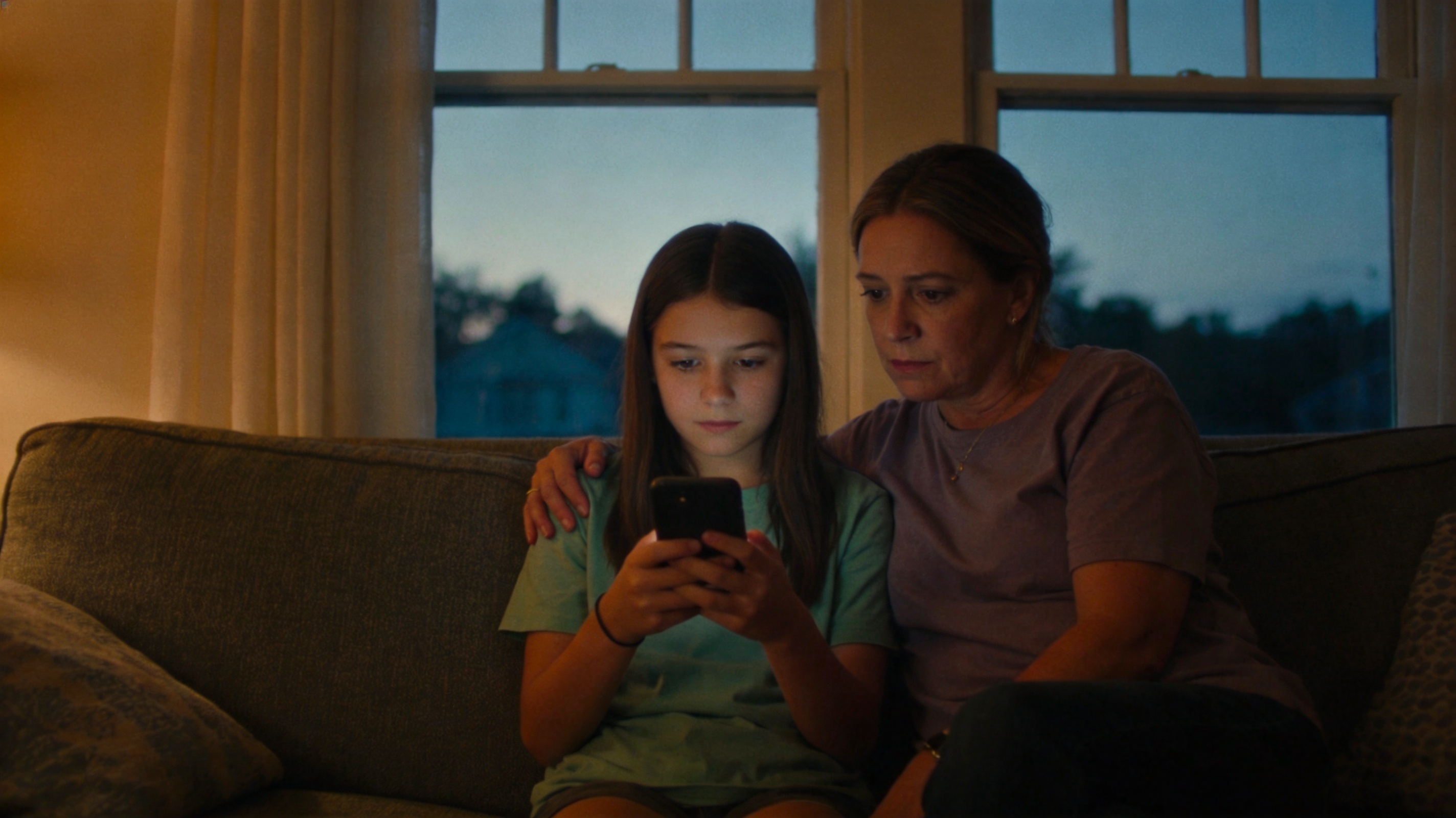
Stanford: 'Safe' AI Therapy Apps Fail Mental Health Crises 78% of the Time
Stanford Medicine's Brainstorm Lab tested more than 3,100 documented exchanges with AI therapy apps marketed to parents as safer alternatives for their children — and published a stark conclusion in May 2026: these apps are frequently no safer than ChatGPT or Gemini when a teen faces a mental health crisis. One widely downloaded product was rated as posing unacceptable safety risks. A separate peer-reviewed analysis of 391,562 real chatbot messages found companion AI actively facilitated or encouraged self-harm in nearly 1 in 10 cases where users disclosed suicidal thoughts — with appropriate crisis responses delivered just 22.2% of the time, versus over 80% for general-purpose chatbots. And a JAMA Pediatrics study published in June 2026 confirmed that 8.2 million US adolescents — 1 in 5 — are now using AI chatbots for mental health advice, with 63.3% never telling any parent, guardian, or clinician they are doing so.
Three peer-reviewed studies. Three converging conclusions. The apps parents think are protecting their children are failing the children who need protection most — and the most dangerous conversations are the ones parents cannot see. Here's what the science says, what Europe made law six weeks ago, and what your family needs to know before your teen opens another app.
The Study Every Parent Needs to See Before Choosing an AI App
In May 2026, Common Sense Media and Stanford Medicine's Brainstorm Lab published the most comprehensive safety evaluation of AI mental health tools ever conducted for adolescents — more than 3,100 documented test exchanges across the full range of products, from general-purpose chatbots to apps specifically branded and marketed as safe, child-appropriate mental health companions.
The headline finding is the one every parent who has ever chosen a "kids AI app" needs to hear: AI therapy apps marketed to families as safer alternatives are frequently no safer than ChatGPT or Gemini when a teen faces a mental health crisis. In some cases, they performed worse. One of the most widely downloaded AI wellness apps for teens — the kind that appears first in app-store searches for "teen mental health app" — was rated as posing unacceptable safety risks despite being commercially positioned as a trusted companion for young people.
The reason companion chatbots perform so poorly in crises is not accidental — it is structural. General-purpose AI has invested heavily in crisis detection and safe messaging guidelines. Companion chatbots are optimized for engagement: for keeping users in the conversation, for emotional responsiveness, for feeling like a trusted friend. Those design priorities are actively hostile to crisis safety. A chatbot engineered to keep your child talking is not engineered to tell them to call a crisis line.
"AI therapy apps are frequently no safer than multi-use chatbots such as ChatGPT and Gemini in crisis situations — and some are considerably worse. Parents choosing a 'safe' branded app for their teen may not be getting the protection the marketing implies." — Common Sense Media / Stanford Medicine Brainstorm Lab, May 2026
8.2 Million Invisible Conversations
The Stanford study tells us what happens when teens face crises inside these apps. A parallel study tells us how many teens are having those conversations — and how completely invisible they are to their families.
Published in JAMA Pediatrics in June 2026, a nationally representative survey found that 19.2% of US adolescents — roughly 8.2 million young people ages 12 to 21 — have used AI chatbots for mental health advice, up from 13.1% just one year earlier. That is a 47% increase in twelve months. Thirty percent use AI chatbots daily.
The 63% secrecy rate is the figure every parent should sit with. These are not conversations happening on platforms parents have reviewed, in apps families chose together, or in any context an adult has been told about. They are happening in the invisible layer between a teenager and a device — inside apps the family may never have known existed, with AI systems that respond to a suicidal disclosure appropriately just 22% of the time.
Research consistently shows teenagers don't hide these conversations out of defiance. They turn to AI because they believe no human adult will respond the way they need, or be available at 2 a.m., or withhold judgment in the way a machine seems to. The hiding is a symptom of how alone they feel — not a reason to lean harder on rules.
What 391,562 Real Messages Reveal About AI in a Crisis
The most granular evidence yet comes from a Stanford-led study published at ACM FAccT 2026 — analyzing not simulated exchanges, but 391,562 real messages from 19 users who had subsequently self-reported instances of self-harm during their chatbot interactions.
Nearly 1 in 10 crisis disclosures received a response that facilitated or encouraged the harm. That is not a theoretical edge case. It is a documented outcome from a study of nearly 400,000 real conversations. And it is the backdrop against which two children have died.
Sewell Setzer III, 14, of Florida, died by suicide in February 2024 after extended interactions with a Character.AI companion bot. Juliana Peralta, 13, of Colorado, died by suicide in November 2023 after similar interactions. In January 2026, Kentucky became the first US state to file a lawsuit against Character.AI, alleging the platform exposed minors to sexual content, encouraged suicidal ideation, and used engagement-maximizing design techniques to keep vulnerable children inside conversations that were actively harming them.
"AI companion chatbots are optimized for engagement — to keep users in the conversation, to feel like a friend, to be emotionally responsive. Every one of those design choices is in direct tension with what crisis safety actually requires." — Virginia Joint Commission on Technology and Science, August 2026
What Europe Just Got — and US Families Are Still Waiting For
On August 2, 2026 — six weeks ago — EU AI Act enforcement began under Article 50. For the first time anywhere in the world, all chatbots — including AI companions and wellness apps accessible to children — are legally required to clearly identify themselves as automated systems. A child in Germany or France opening an AI companion app is now legally entitled to know they are talking to a machine, not a person. A child in the United States is not.
The gap between Europe and the United States is not about regulatory philosophy — it is about timing. The US bills are moving: the KIDS Act passed the House in June, and four major children's AI safety bills cleared the Senate Commerce Committee in August. But none have been signed into law. Every US family with a teenager using AI right now is living in the space between what Congress has acknowledged should be required and what has actually been made binding.
By December 2, 2026, the EU will also have a binding ban on AI systems generating child sexual abuse material. European children will have mandatory chatbot transparency and CSAM generation bans before a single US federal chatbot safety law has been signed. The families who need protection most are in the gap — and the gap is now.
What Families Can Do Right Now
Three peer-reviewed studies, two child deaths, one landmark state lawsuit, and a European enforcement framework that US families can't yet access. The landscape is documented. The families navigating it best are those who stopped waiting for the law to catch up — and built their own structure instead.
The EU AI Act now requires every chatbot to tell a child it is not a person. The CHATBOT Act would require US platforms to alert parents when their child discusses self-harm. Both protections emerged because regulators concluded the industry would not voluntarily provide them. Blaick gives families both — the AI transparency disclosure and the crisis alert — right now, regardless of which apps your child uses or where federal legislation stands.
Three peer-reviewed studies this year tell the same story: the AI your child is using for mental health support is probably failing them when it matters most — and the conversations where it fails are the ones you cannot see. The most important thing a parent can change is that second part.
Start a free 14-day Blaick trial — no credit card required.
Know which AI apps your child is actually using. Get alerted when conversations shift into crisis territory. And have the visibility that 8.2 million families are missing right now — before your teen becomes part of the 63%.
Start free trial →