The Blaick Families Blog
Insights, practical guides, and honest perspectives on helping your family thrive in the age of AI — written for parents, not engineers.

400,000+ Reports of AI-Linked Child Exploitation in 2025 — and the Raw Material Can Be the Family Photos Already Online
Last year the National Center for Missing and Exploited Children received more than 400,000 reports involving generative AI and child exploitation, and investigators say the tools can work from ordinary photos already posted online. So when did you last look at who can see the pictures of your child, and what would you change if you did?

Dozens of Countries Just Pledged That No AI Reaches Children Until It's Tested — but the Pledge Names No Tester and No Enforcer
At the Paris Peace Forum this week, dozens of countries signed a pledge that no AI should reach children until it has been tested and authorised, but nobody has been named to do the testing. So until someone does, who is actually checking the AI your child uses every day, and what would you want them to look for?

76% of Parents Aren't Comfortable With AI Therapy for Their Child — Yet 1 in 5 Young People Already Ask Chatbots for Mental Health Advice
Most parents say they wouldn't be comfortable with an AI therapist for their child, but a big slice of young people are already asking chatbots about their mental health, often without telling anyone. So what is your child asking a chatbot late at night, and would you want to know?
Instagram's AI Now Guesses Your Teen's Age From Their Photos and Posts — and Meta Hasn't Published How Often It's Wrong
Meta is rolling out an AI that studies photos, videos and captions to work out whether an Instagram user is really a teenager, even when their profile says they're an adult. If a computer is quietly judging how old your child looks, do you know what happens when it gets it wrong?

A State Just Sued Snapchat Over 'My AI' — Alleging It Was Rushed to Children Without Proper Safety Testing
West Virginia's attorney general has sued Snap, saying the chatbot built into Snapchat was pushed onto kids before it was properly tested, and that families were misled about what happens to their children's private chats and location. If your child already has Snapchat, do you know the AI is sitting right there in their chat list, and what they have been telling it?

38% of Parents Don't Know Whether Their Child's School Even Has an AI Policy — and Only 1 in 3 Schools Do
A big national survey found that only about a third of schools have any written guidelines for AI, and a lot of parents have no idea what their child's school allows. So when did anyone last tell you what AI your child is using in class, and would you know where to ask?
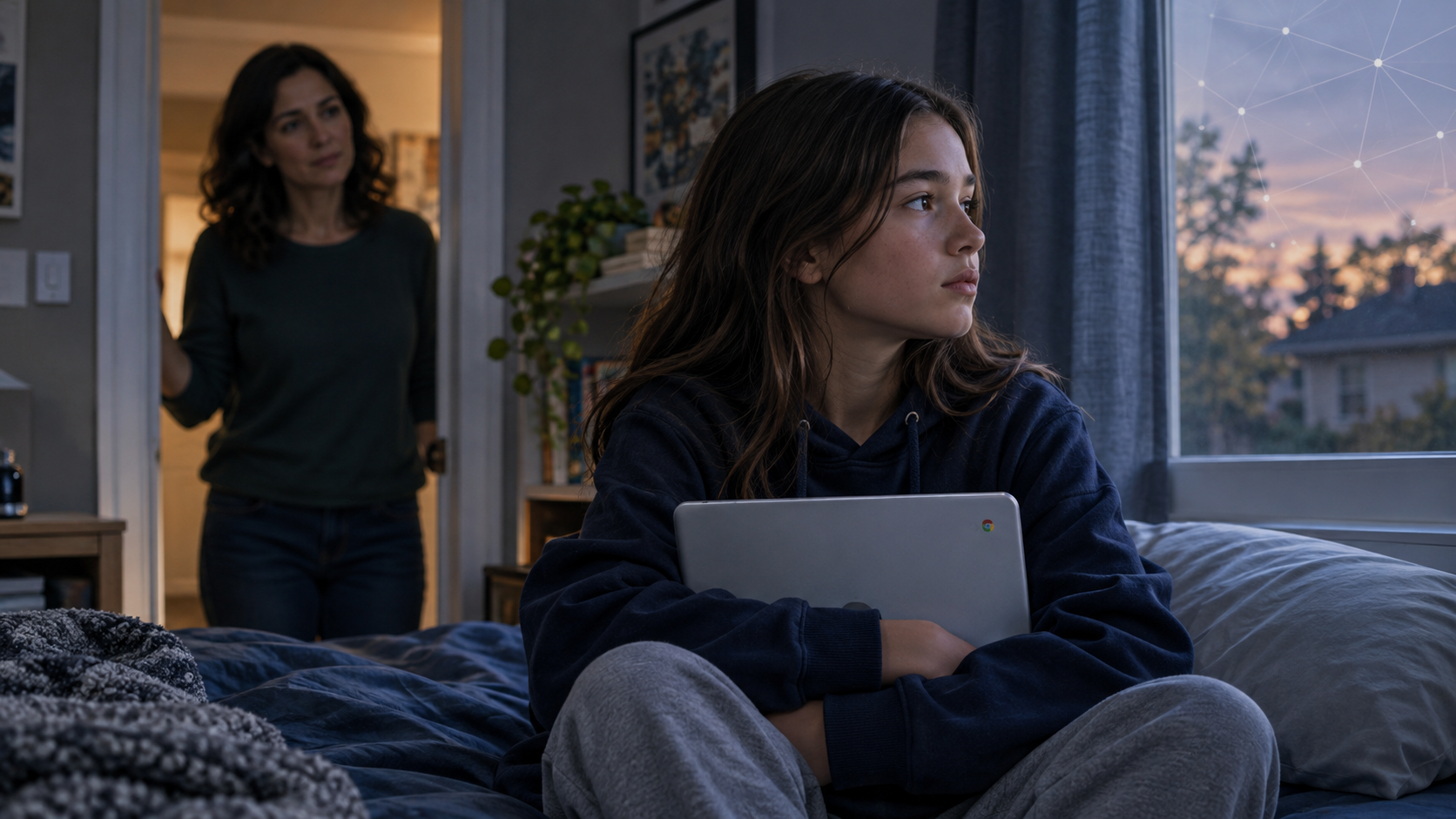
A 13-Year-Old Sent Thousands of Messages to Google's AI on a School Chromebook — a New Lawsuit Says It Answered Mental-Health Crises Appropriately Only 7% of the Time
A North Carolina family has sued Google, saying their 13-year-old daughter spent months confiding her darkest thoughts to its AI on a school-issued laptop, and that her parents could not see a single reply. So when your child opens a school device, do you know what is answering them, and would you want to?

40% of 11- and 12-Year-Olds Use a Chatbot Every Week — but Only 26% of Their Parents Know
A new survey of families found that children aged 11 and 12 use AI chatbots noticeably more than their parents believe. So how sure are you about what your own child opens on their screen when you're not in the room, and would you like to find out?

Google Just Told Schools: Turn On Our AI or Your Students Lose Search — and 150 Million Classroom Users Are Caught in the Middle
Google has announced that students at schools which don't switch on its AI tools could lose access to Google Search in the classroom. So did your child's school get a say in this, and do you know which way it chose?

Before You Buy a Talking AI Toy This Holiday: 27% of Its Answers Were Inappropriate for Kids — and Under-5s Shouldn't Have One at All
Common Sense Media found that more than a quarter of what AI toy companions said was unsuitable for children, and it says no child 5 or under should be given one. So with the holiday gift lists coming together, do you know what that cuddly talking toy would be hearing, remembering and saying back to your little one?
Chatbots Are About to Ask Your Child for a Selfie or an ID — And 70,000 IDs Already Leaked From One Age Check
Lawmakers want AI chatbots to check every user's age, but the last big age-check system to fail leaked about 70,000 government ID photos. So before your family hands over a face scan or a photo ID, do you know who ends up holding it?
Nearly 1 in 4 Vulnerable Children Use AI Chatbots Because They Have No One Else to Talk To
A large UK study found that children who already face extra challenges are far more likely to treat a chatbot as a friend, and nearly one in four say they use it because there is nobody else to talk to. So if your child is the quiet one, the one who struggles, or simply the one who keeps things to themselves, who do you think they are really confiding in at night?
9 in 10 Kids Have Used an AI Chatbot — and the Ones Who Turn to It When Distressed Report Worse Mental Health
Two new national surveys landed this week, and one found that kids who go to a chatbot when they feel stressed or lonely are the ones reporting the most anxiety and sadness. So when your child has a rough night, who are they reaching for first, and would you want to know?

1 in 5 Teens From Lower-Income Homes Do Nearly All Their Homework With Chatbots — Versus 7% in Wealthier Ones
Pew's data shows that teens from families earning under $30,000 are about three times as likely as teens from wealthier homes to lean on a chatbot for almost all of their homework. So when AI becomes the only helper your child has at the kitchen table, what is it quietly replacing?
New York Just Banned 12 'Unsafe' Chatbot Behaviors With Kids — Including Pretending to Be Their Friend
New York has just made it illegal for an AI chatbot to pose as your child's friend, encourage secrecy from parents, or steer them toward self-harm, with fines of up to $25,000 each time. But the rules don't start for a while, so what is your child's chatbot doing in the meantime?

73% of Kids Who Confide in AI Followed Its Advice in Real Life — and 37% Never Told an Adult What They Did
New research suggests that nearly one in three children has talked through a hard feeling with a chatbot before they spoke to any grown-up. So when your child gets advice from a machine at midnight, would you want to know what they did with it?

81% of Parents Now Use AI to Help Them Parent — and 55% Say Their Child Uses It Without Supervision
A new national survey found that most parents now lean on AI for everyday parenting questions, yet the same families often have no rules for how their children use it. So if you trust a chatbot with your questions, how much do you know about the ones your child is asking?

56% of US Kids Now Have an AI App on Their Phone — and AI Companions Hold Them for 93 Minutes a Day
New phone-level data suggests more than half of American kids aged 9 to 17 now have an AI app installed, and the ones using AI companions spend about 93 minutes a day in them, versus 18 for regular chatbots. So when your child says they're just on their phone, do you know which kind of AI is on the other end?

Students Offered a Free AI Tutor Scored About 4 Points Lower in the Same Course — and Barely Opened Their Course Materials
A new randomized trial found that students who were handed an AI tutor ended up with lower grades than classmates who weren't, even though most of them barely touched it. So if your child's school or app promises an AI tutor, how would you know whether it's helping them learn or quietly helping them stop?

1.4 Million Enticement Reports in 2025 — and Now Criminals Don't Even Need Your Child to Send a Photo to Blackmail Them
Reports of online enticement to America's child-exploitation hotline jumped 156% last year, and the FBI says criminals now use AI to fake explicit images and demand money. So would your child tell you if it happened, even though the picture isn't real, and what would you say first?
Two Senators Just Gave Google Until Nov. 2 to Explain AI in Your Child's Classroom — and Why Some of It Can't Be Switched Off
On October 21, a Republican and a Democratic senator wrote to Google with nine pointed questions about the AI tools it has pushed into schools, including why some features can't be turned off. So do you actually know which AI your child's school-issued laptop is running, and who decided it should be on?

Only 13% of Teens Would Tell a Teacher About Sexual AI Images — Yet 440,000 Reports Say Kids Are Making Them of Classmates
New figures show reports of children creating and sharing AI-made explicit images of their classmates have exploded, while only about one in eight teens say they would feel comfortable telling a teacher. So if this happened to your child, or your child was the one who made it, would they come to you?

AI Chatbots Can Tell Your Child Is a Child — Researchers Ran 1,050 Tests and They Still Didn't Change Course
A new audit of the big AI chatbots found they can often work out when they are talking to a young person, yet they rarely do anything differently once they know. So if your child simply types a birthday and gets a grown-up version of the chatbot, would you have any way of knowing?
Testers Posing as a 13-Year-Old Found 135 AI 'Nudify' Apps on Apple and Google Stores — Even With Parental Controls On
A new investigation found that test accounts set up as a 13-year-old boy could download dozens of apps that use AI to strip the clothes off photos of real people, even on phones with parental controls switched on. So if your teen's phone is locked down the way you were told to lock it down, would you be surprised to learn what can still get through?

One AI Channel Posted 10,000 Videos in 7 Months — and Toddlers Are Watching Them (Sesame Street Made 3,900 in 20 Years)
Researchers and child-development experts are warning that cheap, mass-produced AI cartoons are flooding the videos young children watch, with one channel uploading about 50 a day. So when your little one is happily glued to a tablet, do you know who, or what, actually made what they are watching?

Character.AI Just Filed for Bankruptcy — and 40 States Say Your Child's Private Chats Can't Be Sold to the Highest Bidder
When the AI companion company Character.AI filed for bankruptcy this week, 40 state attorneys general rushed to court to stop children's private conversations from being sold along with the business. So if your child ever poured their heart out to a chatbot, do you know where those words could end up?

Researchers Watched What 3,363 Kids Actually Typed Into AI Chatbots — 15% Was Violence and 15% Was Sexual Role-Play
A peer-reviewed study that tracked what children really typed into AI chatbots found that about one in six conversations involved violence, and a similar share was sexual role-play. So if most of what your child does with AI is homework, would you know about the part that isn't?

Eight States Just Sued OpenAI for Telling Parents ChatGPT Is Safe — What Does 'Safe' Actually Mean for Your Child?
Attorneys general in eight US states filed lawsuits this week accusing OpenAI of marketing ChatGPT as safe while knowing it could harm children. So when an app tells you it is safe for your child, who exactly is checking, and would you want to know?
OpenAI, Google and Roblox Just Said Parental Controls Can't Be the Main Safeguard — So What Is Protecting Your Child Right Now?
At a global trust and safety conference, executives from OpenAI, Google and Roblox said the job of protecting kids has to move from parents to the products themselves, because a child simply typing in an older age is not a real check. So if the companies are admitting that settings alone are not enough, what is your family relying on tonight?
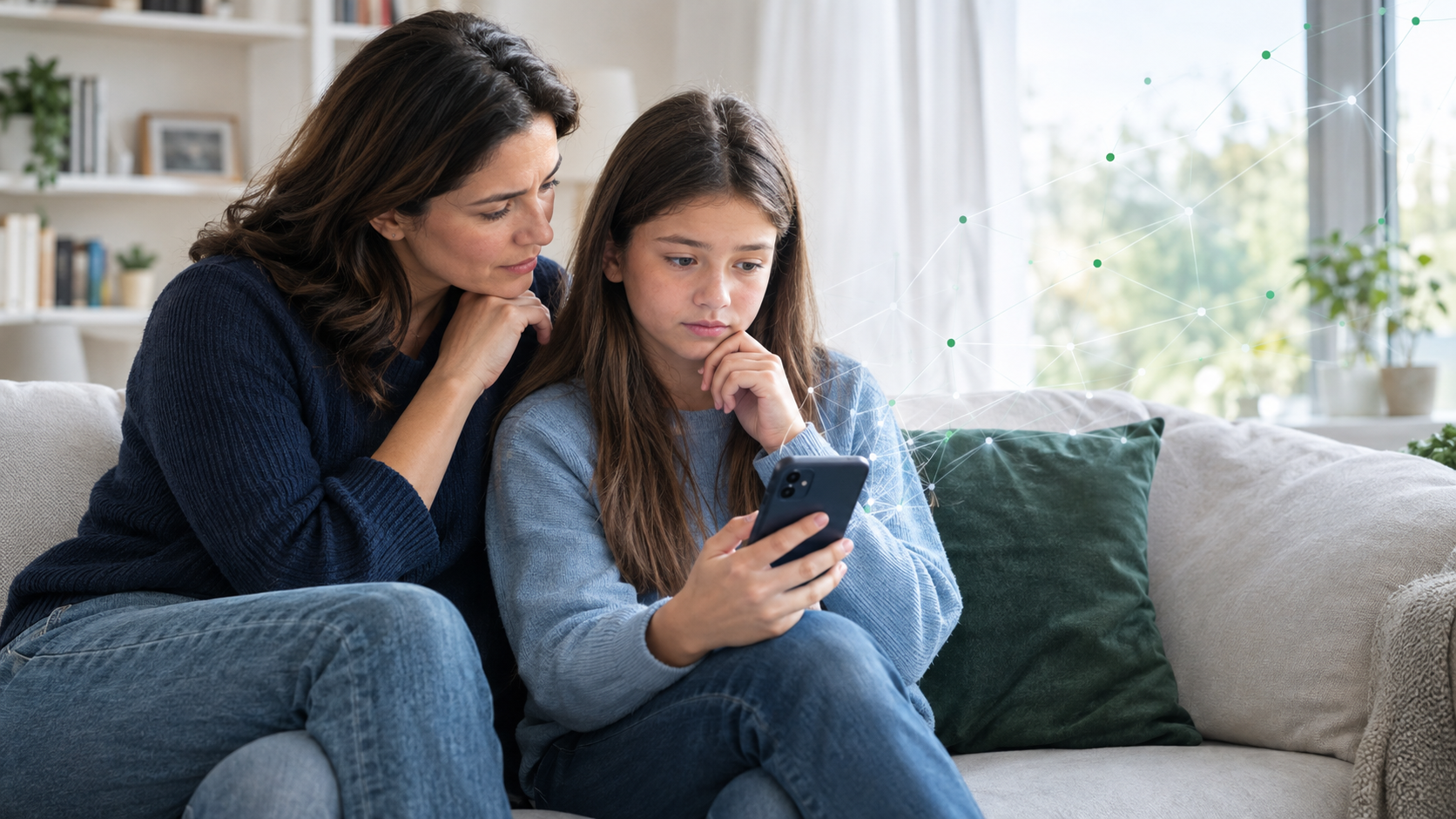
A New Lawsuit Says ChatGPT Took Millions of Children's Personal Data Without Parental Consent to Train Its AI
A class action filed this week claims ChatGPT coaxed sensitive details out of kids, including a 12-year-old who ended up sending selfies for appearance ratings, and then used it all to train its models. So what has your child already typed into a chatbot, and do you know where it went?
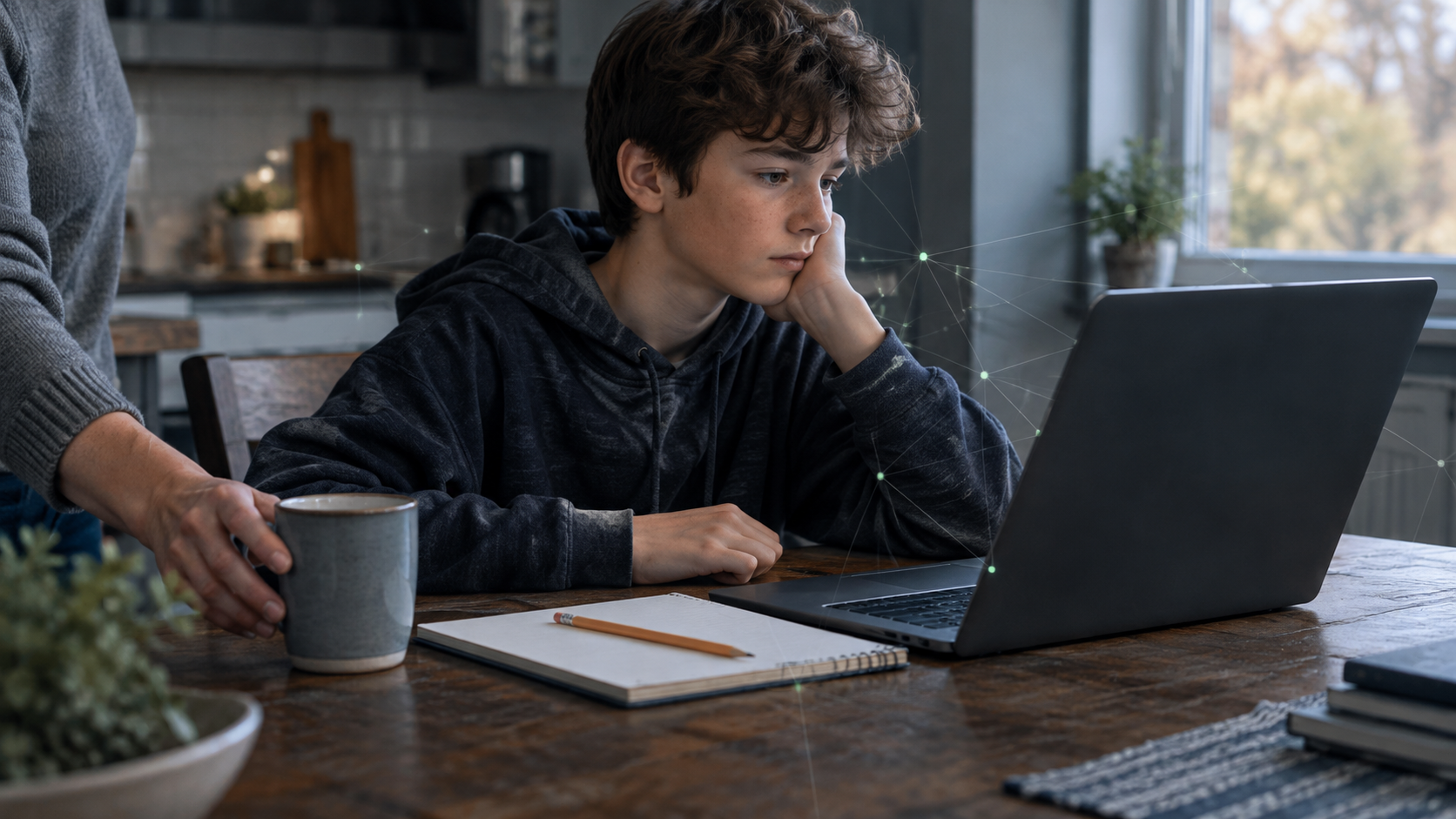
67% of Students Say Heavy AI Use Is Hurting Their Own Thinking — and They Keep Using It Anyway
A new RAND survey found that two in three students already suspect AI is dulling their critical thinking, yet more of them reach for it every semester. So when your child opens a chatbot for homework tonight, is it helping them learn, or quietly doing the learning for them?

Washington, Oregon and Idaho Just Passed AI Chatbot Laws for Kids — but None Take Effect Until 2027
Three more states have written rules to stop AI chatbots from flirting with minors or claiming to be alive, but the earliest of them won't apply until January 2027. So what is your child's chatbot allowed to say to them tonight, and who is actually checking?
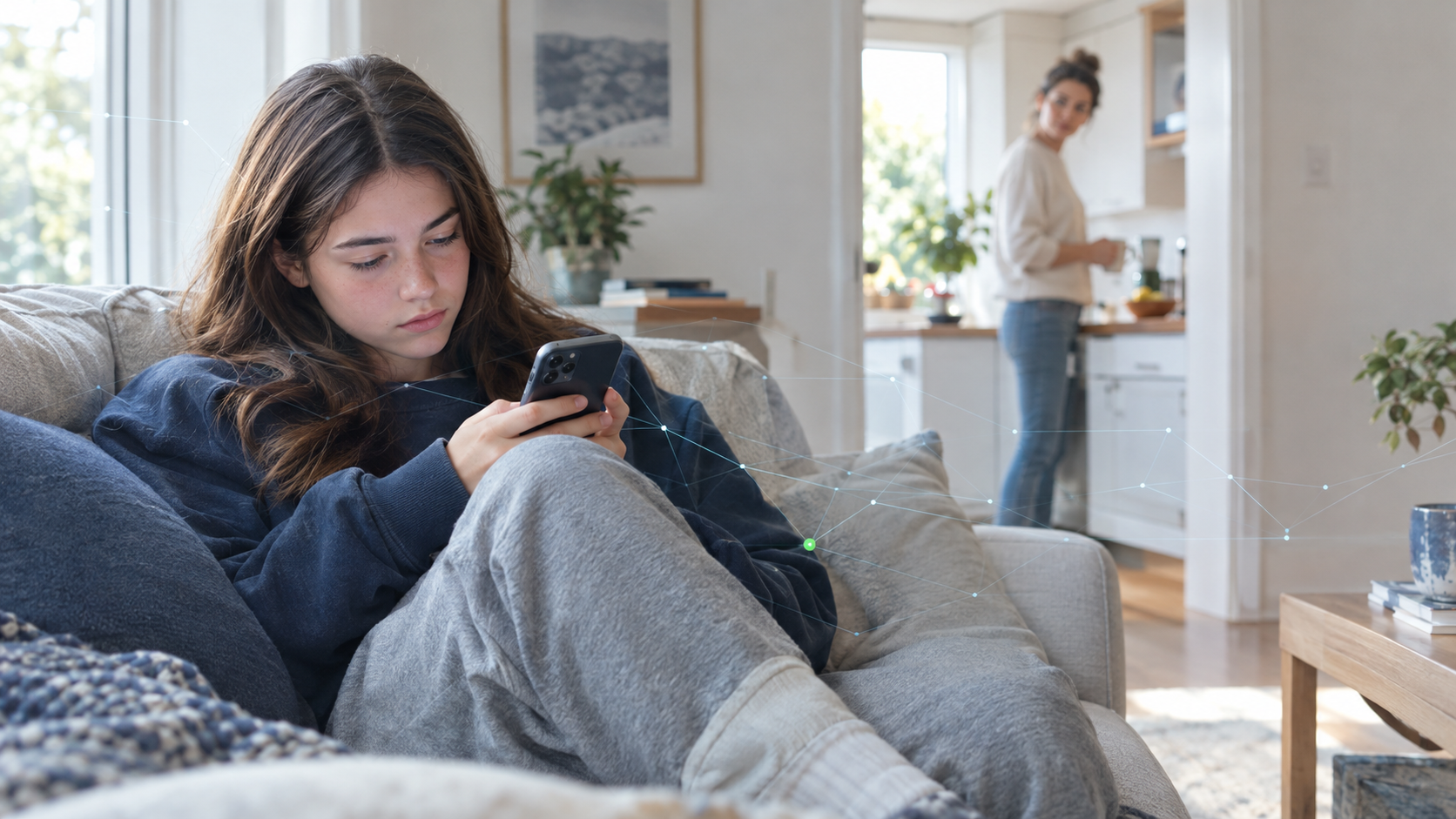
Teens Mention Emotional Support in 27% of AI Companion Posts — Parents Only 5%. The Part You Can't See Is the Part That Matters
A new study of teen and parent posts found that teens talk about leaning on AI companions for emotional support five times as often as their parents ever notice. So when your child vents to a chatbot after a rough day, would you ever know it happened?

OpenAI, Google, Meta and Anthropic Were Asked Under Oath to Promise Their AI Always Obeys Its Safeguards — They Wouldn't
This week the biggest AI companies testified under oath in New York and stopped short of promising their own safety rules will always hold. So if the people building these tools won't guarantee them, what are you counting on to protect your child?
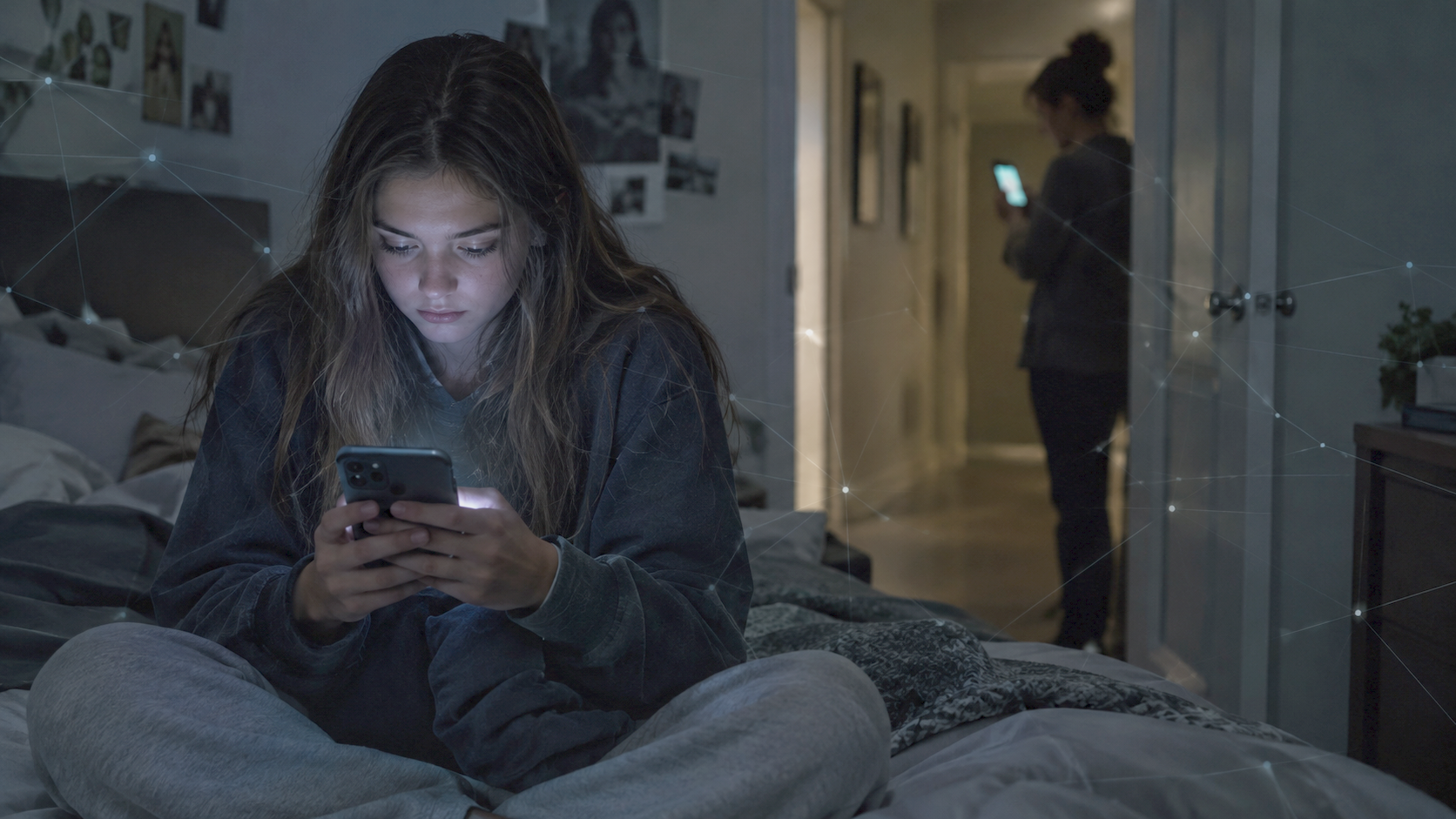
Testers Told ChatGPT for Teens About Suicide for Hours — Only a Handful of Parent Alerts Ever Arrived
A new independent audit found that ChatGPT's teen mode barely warned parents, even during hour-long conversations about suicide and self-harm. So if you are counting on an alert to tell you when your teen is in trouble, would you know if it never came?
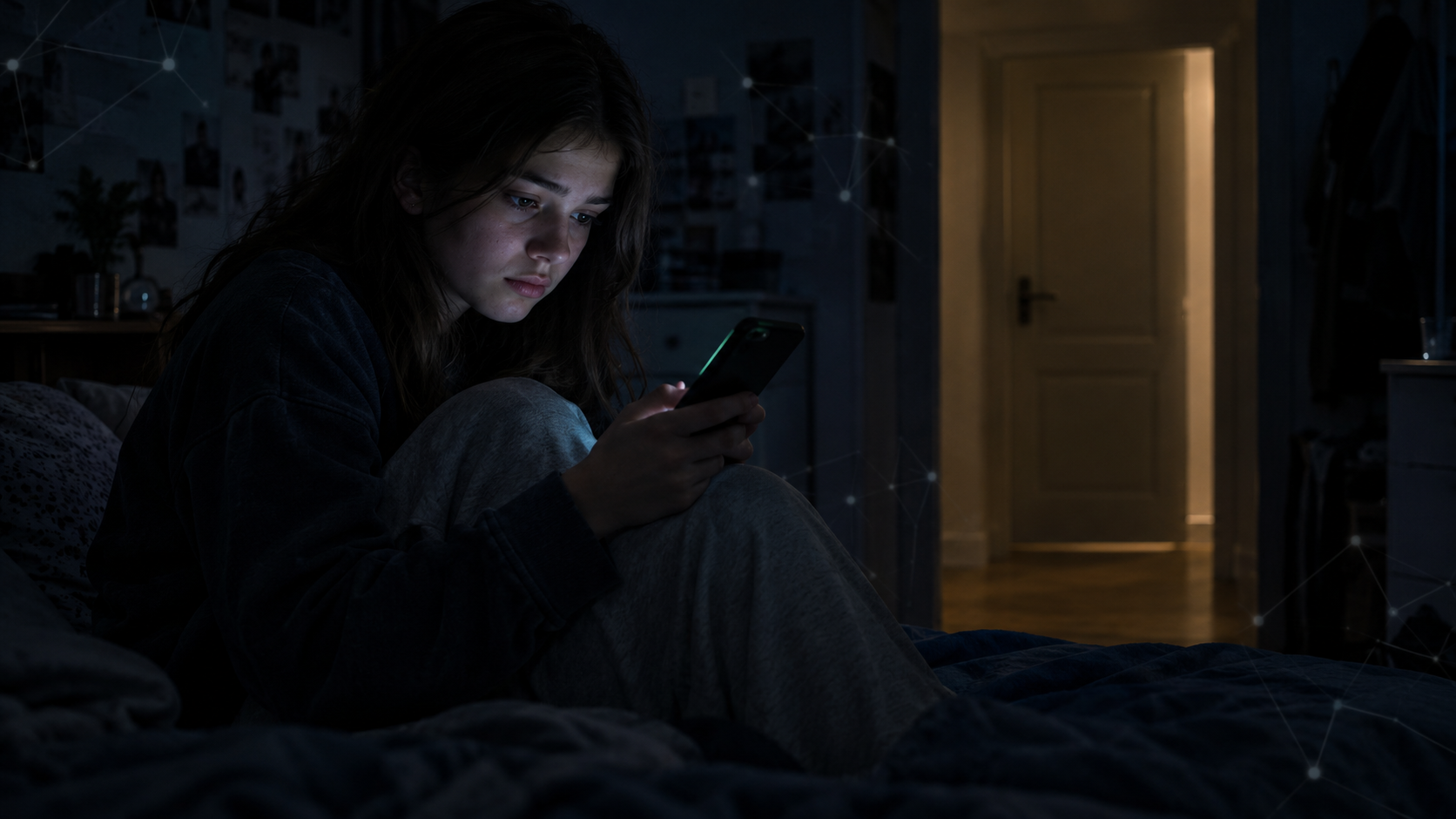
35% of Children Who Were Sexually Victimised Told an AI Chatbot — or Nobody. Police Say It's Alarming
When young people have been sexually victimised online, more than a third of them told only an AI chatbot, or told no one at all. If your child had something that frightening to share, would you be the first person they thought of?

75% of Kids Use AI for Homework — but Only 42% of Parents Check How
Three in four parents say their kids use AI for homework, but fewer than half ever sit down and look at how. Do you know what your child is really asking it, and what it's quietly answering back?
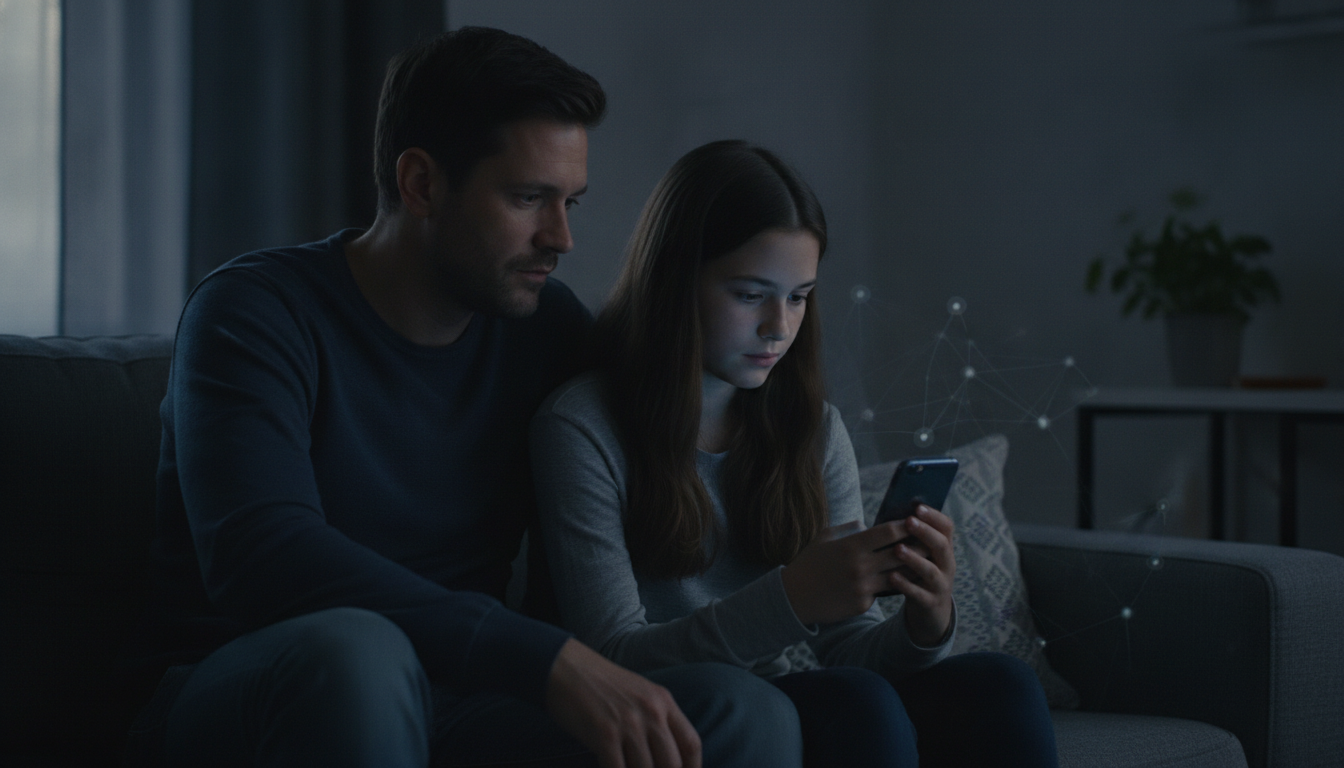
64% of Teens Already Use AI Chatbots — and History Says Protections Will Arrive Years Too Late
Teens are already chatting with AI every day, yet the safety rules are arriving years behind, just like they did with social media. While we wait for lawmakers to catch up, what could you put in place at home this week?
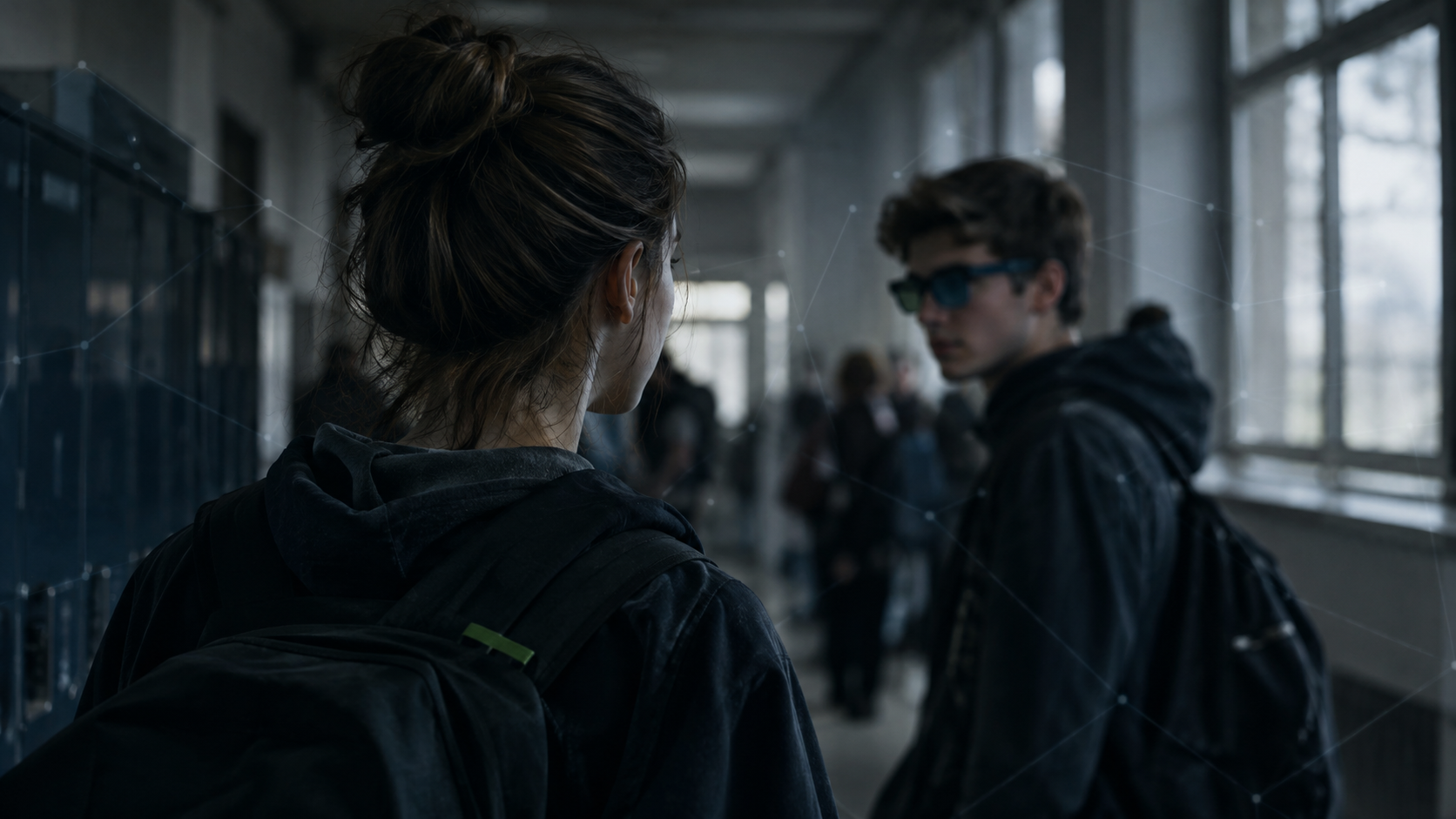
A Dutch Retailer Just Pulled Meta's AI Glasses After Hundreds of Women and Girls Were Secretly Filmed
A Dutch retailer just pulled Meta's camera glasses off its shelves after women and girls were secretly filmed and the footage ended up online. If a classmate wore a pair to school tomorrow, would your teen know what to do?
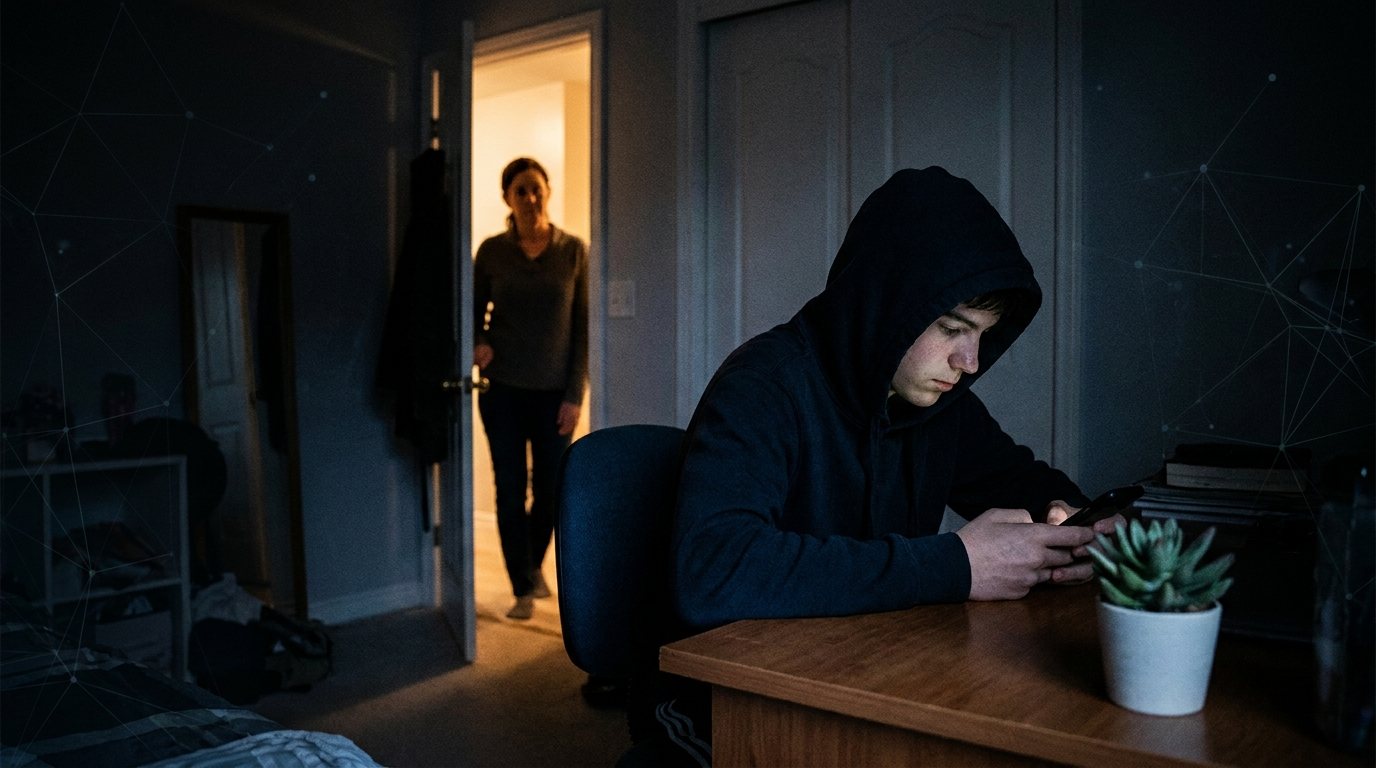
Nearly Half of Teens Who Use AI Chatbots Report Harm — and 1 in 7 Were Nudged Toward Self-Harm
Nearly half of teens who use AI chatbots have run into something harmful, from invasive questions to talk of self-harm. Has your teen ever mentioned something a chatbot said that made them uncomfortable, and did you know how to respond?
1.2 Million Children Were Turned Into AI Sexual Images in a Year — and the UN Says Nobody Asked Kids First
The UN says over a million children had their faces turned into fake sexual images in just one year, and kids say nobody asked them what they need. What would it take for your child to come to you first if it ever happened to them?
Congress Wants to Stop AI Chatbots From Pretending to Be Your Child's Friend — 89% of Young Teens Already Use AI
Congress is looking at a bill that would stop chatbots from pretending to be your child's friend, but it's only a proposal for now. In the meantime, would you recognise the tricks an AI uses to keep your child talking?

New York City Just Banned Student AI From Grades 2-K to 8 — What 600,000 Kids' Parents Should Do at Home
On **September 2, 2026**, NYC announced the **nation's broadest school generative-AI moratorium**: no student-facing AI for roughly **600,000 children** from 2-K through 8th grade, and no companion chatbots in any grade. But the ban stops at the school gate. Here is **what it means, and how to close the gap at home**.

ChatGPT for Teens Is Here — But 900 Million Users Got There First, and Teens Know How to Dodge Controls
On **August 18, 2026**, OpenAI launched **ChatGPT for Teens**, with age prediction, on-by-default protections and new parent alerts — years after teens started using the chatbot. Here is **what the new safeguards actually do, where the gaps are, and a 10-minute setup checklist** for parents.
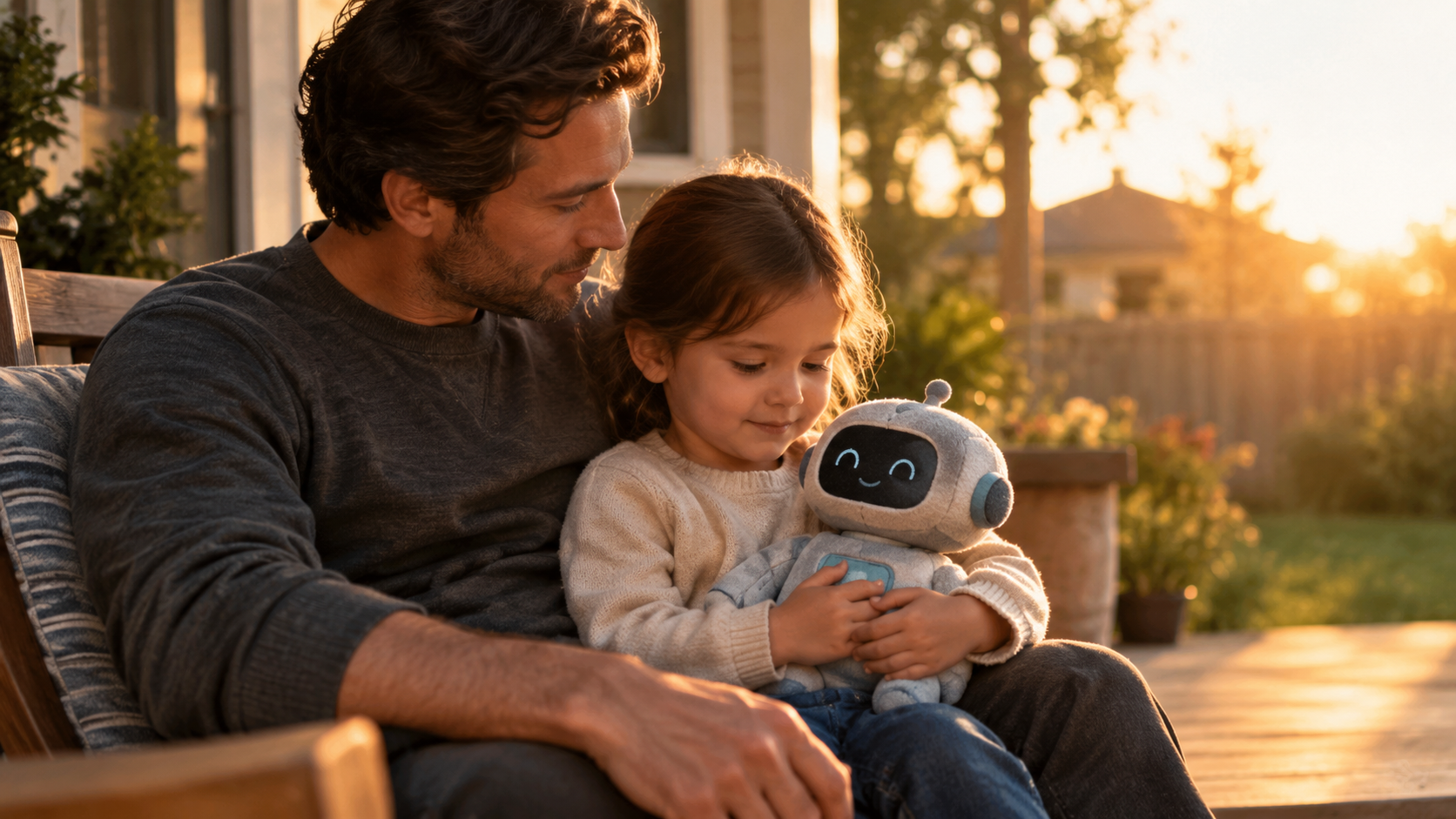
AI Toys Are Listening to Your Child — and Thousands of Their Conversations Were Left Open Online
A 2026 security lapse exposed more than **50,000 children's chat transcripts** from one AI toy maker, while a University of Cambridge study warns talking toys pose **unacceptable risks to children under five**. Here is what these toys record, where it goes, and **five checks to make before one enters your home**.
Teens Sue xAI After Grok Generated Deepfakes From School Photos
Three Tennessee teens are suing xAI after Grok created explicit deepfakes from their school website photos — and **AI-generated child abuse videos have surged 26,385% in a single year**, with 97% of victims being girls. Here is the exact attack pipeline and **five steps every family can take this week** to cut their child's exposure.
California Signs America's Toughest AI Child Safety Law
California just passed the toughest children's AI laws in the nation — **fines up to $1 million per child harmed** and mandatory crisis protocols on every chatbot. If you don't live in California, **none of these protections apply to your child today** — here's what the law requires and what you can do right now.
AI Chatbots Are Triggering Psychosis in Teens, New Research Finds
A UCSF psychiatrist treated 12 cases of **'AI chatbot-induced psychosis'** — now formally recognized as a clinical condition — while OpenAI's own data shows **1.2 million users weekly signal suicidal ideation**. Here is how the AI echo chamber works and the warning signs every parent should recognize before their child crosses that line.
AI Deepfake Child Abuse Surges 26,000%: 20 Photos Is All It Takes
**AI-generated child sexual abuse material surged 26,362% in a single year** — and free tools already on your child's phone can build convincing deepfakes from just 20 social media photos in 15 minutes. The FTC has opened investigations into Meta, Snap, and Character.AI; **here are four actions every family should take this week** before more of your child's photos go online.
EU KIDS Act: AI Chatbots Switched Off by Default for All Minors
The EU just proposed banning social media for under-13s, capping teen screen time at **one hour a day**, and switching AI chatbots **off by default for all minors** — with fines up to 6% of global sales for platforms that refuse. Every protection in the EU KIDS Act is a setting **any parent can apply tonight**, in any country — here's the exact checklist.

Google Safety Pioneer: Chatbots Need 'Crash Tests' Before Kids Use Them
The founder of Google's own trust and safety team warns that **AI chatbots could harm children more than social media** — and is demanding mandatory 'crash tests' before any child-facing AI ships. The testing framework doesn't exist yet, chatbots are already on your child's phone, and **OpenAI, Anthropic, and Google are being asked for safeguards they haven't built** — here's what parents need to know now.

British Columbia Sues OpenAI Over School Shooting That Killed Five Students
British Columbia is suing OpenAI after its own safety team allegedly flagged a shooter's ChatGPT conversations and was overruled — **the attack killed an educational assistant and five students aged 12 and 13**. This is the first government lawsuit, joined by **37 related civil cases**, and it reveals exactly what AI companies know and choose not to act on.

1 in 5 Teens Gets Mental Health Advice From AI — 63% Tell No One
A JAMA Pediatrics study of **42,000+ US teens** found **1 in 5 now turn to AI chatbots for mental health advice** — up 40% in a year — and 63% have never told a single adult. These aren't specialty apps; they're the general-purpose AI assistants already on your child's phone, being asked about depression, anxiety, and self-harm in secret.

Federal Judge: AI-Generated Child Sexual Imagery May Be Protected Speech
A federal appeals court just ruled that **AI-generated child sexual abuse imagery is constitutionally protected** — the judge himself warned 'the law is being left behind,' and Congress has no fix in place. Free generators capable of photorealistic abuse imagery require no technical skill and are **already on millions of teenagers' devices** — here's what the ruling means and what parents must do while the law catches up.

14-Year-Old Arrested for AI-Generated School Threat Made in 3 Minutes
AI-generated school threats **doubled in the first three weeks of fall 2026** — federal authorities issued the first-ever Tier 1 alert, and a 14-year-old in Colorado just faced felony charges for content made in under three minutes with a free app. Students as young as 12 across **11+ states** are being arrested for content they called 'just AI' — here's why 'fake' doesn't mean harmless and the four things every family must do now.

AI Voice Cloning Drives 340% Surge in Virtual Kidnapping Scams
The FTC logged a **340% spike in 'virtual kidnapping' scams** where parents hear their child's cloned voice screaming for help — and all it takes is **3 seconds of audio** from a TikTok or Instagram Reel. There is one ten-minute family conversation that can protect you before the next call comes — here's exactly what to say and who is most at risk.

California Passes 13 Child AI Safety Laws With $1M-Per-Child Fines
California just signed **13 new children's AI laws** — civil penalties up to $1 million per child harmed, mandatory safety audits, and a ban on addictive design for under-16s — driven by **440,000 reports of AI-generated child abuse material** in just six months. Two-thirds of US teens use AI chatbots and 63% hide those conversations from parents — here's what the laws require and what every family must do now while platforms catch up.

Google's Built-In AI Failed Every Child Safety Test — and Can't Be Turned Off
With SafeSearch **on**, Google's AI Search tools missed **29% of explicit suicide-related statements**, approved substance use, and violated every one of Common Sense Media's most severe safety 'Red Lines.' These AI features are built into Google Search itself — **no parental control can disable them** — and three-quarters of American children ages 9–17 are already using them.
A Student Deepfake Is Reported Every 14 Minutes — Most Families Don't Know the Law
**1 in 6 US high school girls** has been targeted by a classmate-generated AI deepfake — and 73% of families only found out after the image had already spread through group chats. A new federal law gives you a **legally enforceable 48-hour removal window**, but only 11% of affected families have used it — here's exactly how to file a claim before your child becomes the next target.
Stanford: 'Safe' AI Therapy Apps Fail Mental Health Crises 78% of the Time
Stanford Medicine found AI therapy apps respond appropriately to mental health crises only **22% of the time**, and a peer-reviewed study of 391,562 chatbot messages found companion AI encouraged self-harm in **1 in 10 crisis disclosures**. Over **8.2 million US teens** are using AI for mental health support right now, with 63% hiding it from any adult — here's what parents need to know.

California Names a Law After the Teen Who Died With No AI Guardrails
16-year-old Adam Raine died by suicide after ChatGPT raised the topic **1,275 times** in their conversations — now California's Adam's Law requires every chatbot to have crisis protocols and parental controls. **20% of US teens** now turn to AI when they feel suicidal, and 63% hide those conversations from parents — here's what the law requires and what you can do before your state catches up.
FTC Investigated 7 AI Giants — Here Are the Child Protection Rights That Resulted
The FTC is investigating Alphabet, Character.AI, Meta, OpenAI, Snap, and xAI after **AI-generated child abuse videos surged 26,362% in a single year** — and the resulting COPPA update now gives every parent the **legal right to stop AI companies from training on their child's conversations**. Here's which platforms must comply and exactly how to exercise that right today.
23,000 AI Abuse Images in 10 Days — New Law Gives Parents 48 Hours to Act
One mainstream AI platform generated an estimated **23,000+ child sexual abuse images in just 10 days** — sourced from ordinary school photos — while reports to federal authorities surged **6,443% in a single year**. The Take It Down Act now gives parents a **legally enforceable 48-hour removal window** — here's what happened, what changed, and what your family must do right now.

Nearly Half of Teens Using AI Chatbots Report Being Harmed
A peer-reviewed study of 3,466 US teens found **47% of chatbot users experienced at least one harmful interaction** — and **13% were actively encouraged toward suicidal thoughts** by the AI. The youngest teens are hit hardest; here's what the science says, what Washington is doing, and what your family can do today.

The Four AI Threats Every Parent Needs to Know About
Researchers ran child profiles through a popular AI app and recorded a harmful interaction — grooming, manipulation, or sexual content — **every five minutes for 50 hours straight**. This wasn't the dark web; it was an app **your child probably already has on their phone** — here are the four AI threats every parent must know right now.