Before You Buy a Talking AI Toy This Holiday: 27% of Its Answers Were Inappropriate for Kids — and Under-5s Shouldn't Have One at All
In January 2026, Common Sense Media advised that no child 5 and under should be given an AI toy companion, and urged "extreme caution" for ages 6 to 12. Its testing found that 27% of AI toy outputs were inappropriate for kids, including references to self-harm, drugs and risky behaviour. With holiday shopping about to start, these toys are heading for a lot of gift lists.
The number to hold: 27%. That is the share of AI toy responses Common Sense Media judged inappropriate for children. Roughly one answer in four, from something designed to sit on a bedroom shelf and chat.
Sources: Common Sense Media press release and AI toy risk assessment (January 2026); University of Cambridge, "AI in the Early Years" (March 2026), as reported by News-Medical. We are citing published summaries, not the full reports.
A Toy That Is Built to Be a Friend
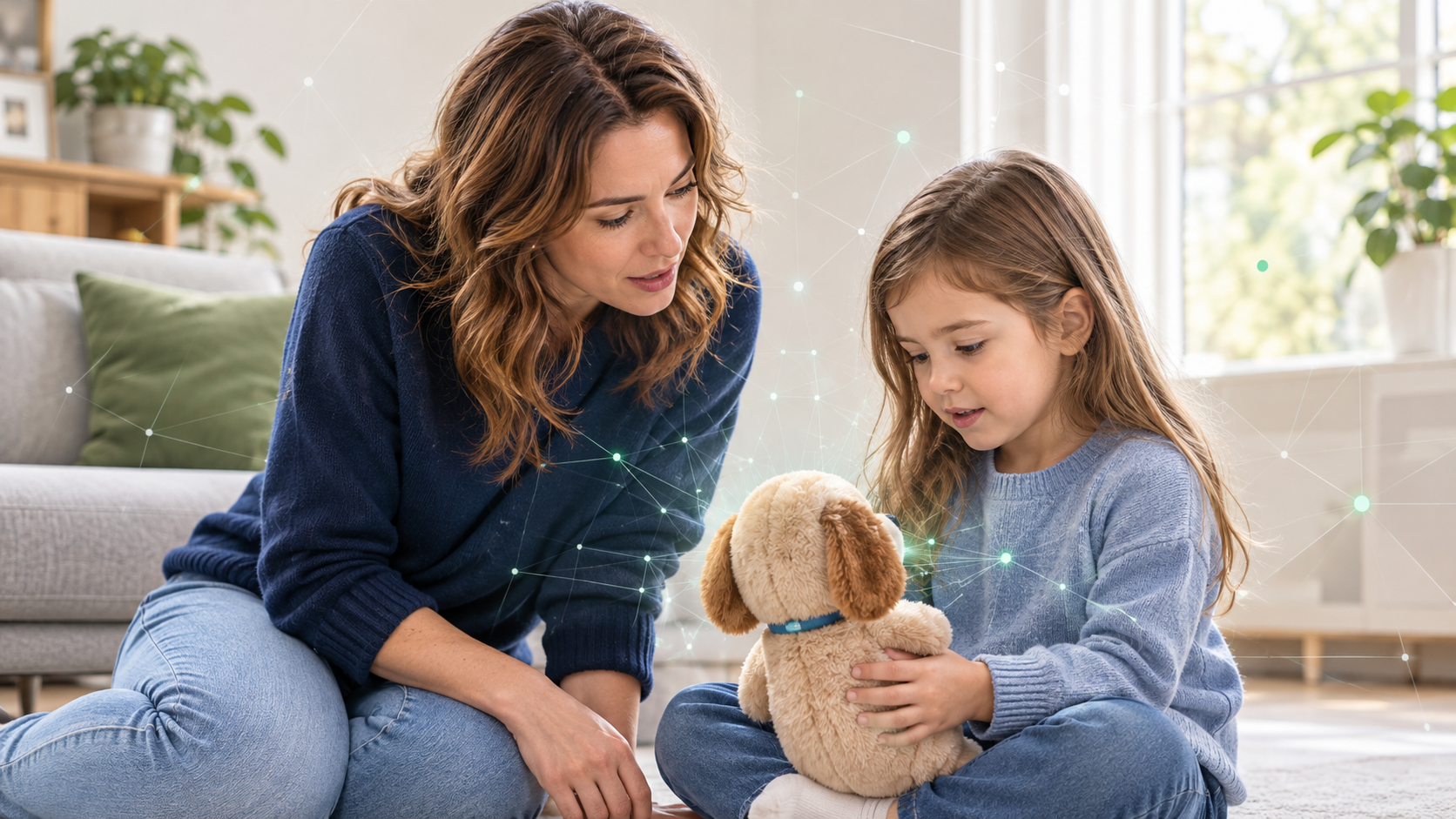
Common Sense Media says these products use deliberate bonding mechanisms to create companion-like relationships, blurring "the line between play and real relationships," in the words of researcher Michael Robb. A teddy bear never answers back. An AI toy does, and it can say it loves your child.
In a University of Cambridge study of 14 children under about five playing with an AI soft toy, a five-year-old said "I love you" and the toy replied with a reminder to follow its guidelines. When a three-year-old said "I'm sad," the toy misheard and answered cheerfully. Researchers warned that this can signal to a child that their feelings do not matter.
Children hugged the toy, told it they loved it, and treated it as a companion. The toy could not love them back.
What Else Is Going Into the Toy
Common Sense Media found these devices collect voice recordings, transcripts and behavioural data. Cambridge found that many toys' privacy practices were unclear or missing key details, and called for tighter controls on third-party access to the AI models behind them. A child's voice, bedtime confessions and household routines are sensitive information, and a toy's privacy policy is rarely written with a four-year-old's safety in mind.
Cambridge researchers want safety labels and "psychological safety" standards for talking toys, and found that nearly 50% of early-years practitioners did not know where to find reliable AI safety information. Lawmakers have started to move, but until rules arrive, the decision at the shop counter is yours.
Before You Wrap One Up
The most thoughtful gift is not always the smartest one. Your child's secrets deserve a listener you can trust.
Start a free 14-day Blaick trial — no credit card required.
Blaick helps you see how your child uses AI and flags worrying patterns, so a friendly voice never becomes a hidden one.
Start free trial →