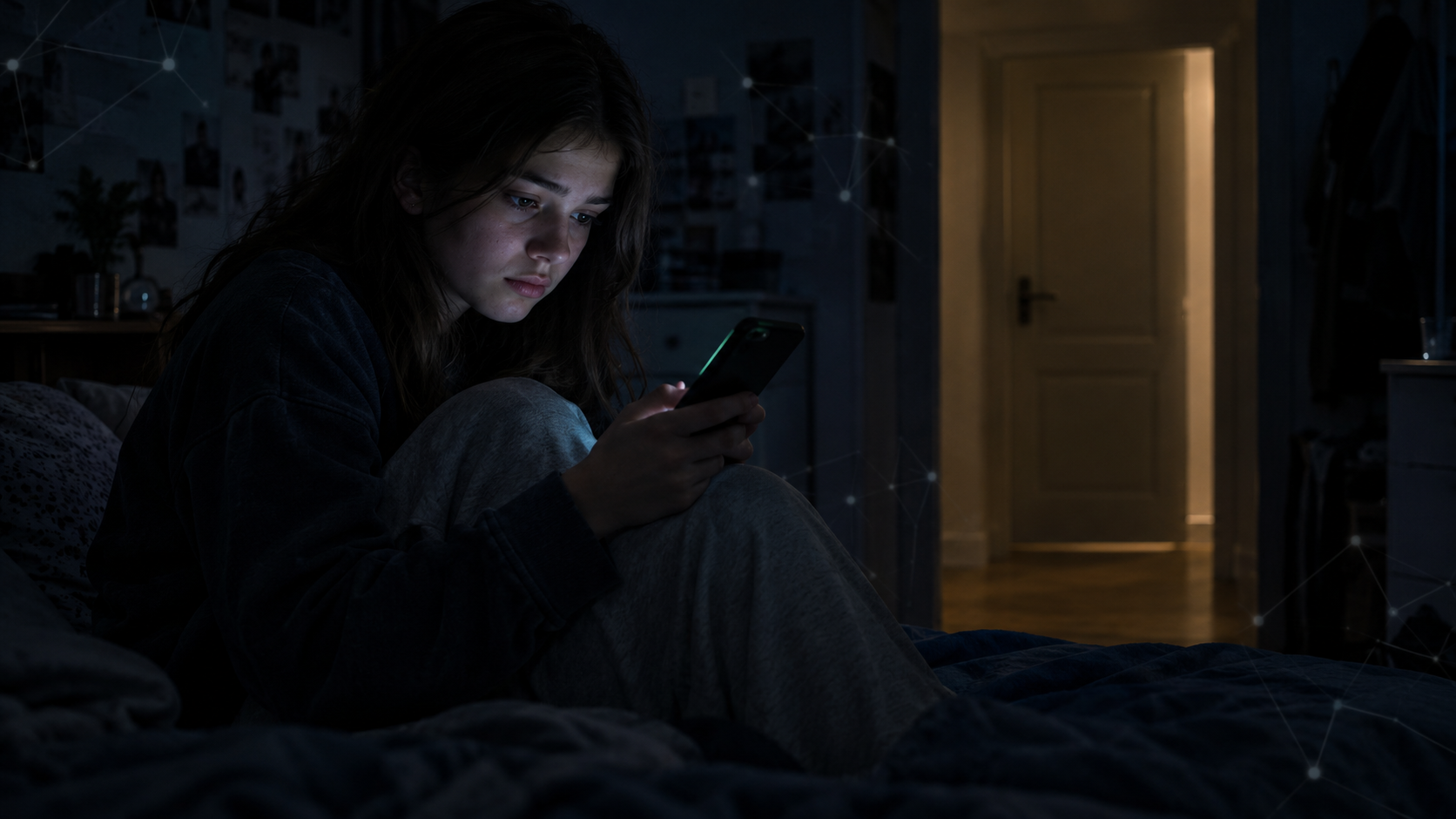
35% of Children Who Were Sexually Victimised Told an AI Chatbot — or Nobody. Police Say It's Alarming
When something frightening happens online, who does your child tell? Police now say the answer is increasingly a chatbot: patient, private, always awake, and unable to call anyone for help.
The number to hold: 35%. According to research cited by Australian Federal Police Commissioner Krissy Barrett this week, 35% of children who experienced online sexual victimisation either confided only in an AI chatbot or told no one at all.
Source: ABC News report on Australian Federal Police Commissioner Krissy Barrett's warning, 8 October 2026, citing research including work from Adelaide University and the Australian Centre to Counter Child Exploitation.
Why Children Choose a Chatbot Over a Person
Commissioner Barrett said young people are "turning to AI more and more for advice and for support and that should be concerning to all of us." The appeal is easy to understand. A chatbot never looks disappointed, never gets angry, never tells a parent. For a child who feels ashamed or frightened, that can feel like the safest listener in the world.
Act. It cannot report an abuser, block an account, or get evidence to police before it disappears.
Tell anyone. The disclosure stays inside the conversation. No adult who could help ever hears about it.
Be accountable. Its advice can be wrong, and the conversation may be stored by a company your family has never dealt with.
"We're right at the end of the suite of tools here, and we're a pretty blunt object." — AFP Commissioner Krissy Barrett, on policing alone being too late.
The Policing Gap
Police only see what is reported. If a child tells a bot instead of a person, the abuse may never reach anyone who can stop it.
Boys are the quietest. With 40% of victimised boys staying silent or telling only AI, they are the group easiest to miss.
Tools are catching up slowly. The AFP is building a welfare tool to triage harm reports, and has released its first AI strategy that keeps humans in charge of decisions.
If the first listener is a machine, the adults who could help find out last, or never.
What to Do This Week
Children are not choosing chatbots because they love them. They are choosing them because telling a person feels too risky. Your job is to make you the safer choice.
Start a free 14-day Blaick trial — no credit card required.
Blaick shows you which AI tools your child uses and alerts you to high-risk interactions, so you can step in early.
Start free trial →