1.2 Million Children Were Turned Into AI Sexual Images in a Year — and the UN Says Nobody Asked Kids First
Back to blog
Family Safety·OCTOBER 3, 2026

1.2 Million Children Were Turned Into AI Sexual Images in a Year — and the UN Says Nobody Asked Kids First

The Blaick Team 6 min read

Most AI safety debates are held by adults, about children, without children in the room. This week the United Nations said so out loud. UN human rights chief Volker Türk put it this way: today's children are "the first generation to grow up with artificial intelligence – yet often the last to be asked for their views." The children who were asked had a clear message for their parents.

The number to hold: 1.2 million. According to UNICEF research presented at the UN, at least 1.2 million children in 11 countries had their likenesses transformed into AI-generated sexual images within the past year. That is not a distant statistic. It means ordinary school photos and social media pictures are being used as raw material.


The Survey
1,000+ Children, 49 Countries
Kids were asked directly what worries them about AI
Parent Trust
64% of Parents Don't Trust AI Firms
56% of teens say the same about AI companies keeping them safe
Safety Testing
80%+ Want Mandatory Tests
Both parents and teens want AI tested before it reaches minors
The Warning
"Voluntary Commitments Are Not Enough"
The UN's message to AI companies

What Children Told the UN They Fear

The children surveyed were not focused on science-fiction worries. Their concerns are the ones sitting on your child's phone today.

Top worries raised by children
FAKES
Deepfakes of themselves and classmates
Fear of being faked, shamed or blackmailed with an image that never happened
DATA
Data exploitation
Their photos, voices and chats being collected and used without a say
CREATE
Eroded creativity
Worry that AI does the thinking and making that they want to do themselves
PEOPLE
AI replacing human relationships
Concern that machines are standing in for friends, teachers and family
Sources: UN News, September 22, 2026; UNICEF and UN human rights office; survey figures on parent and teen trust as reported in the same coverage.
"There was no disguising the damage that AI is already doing to a whole generation of children." — Catherine Russell, UNICEF Executive Director

Why This Matters at Your Kitchen Table

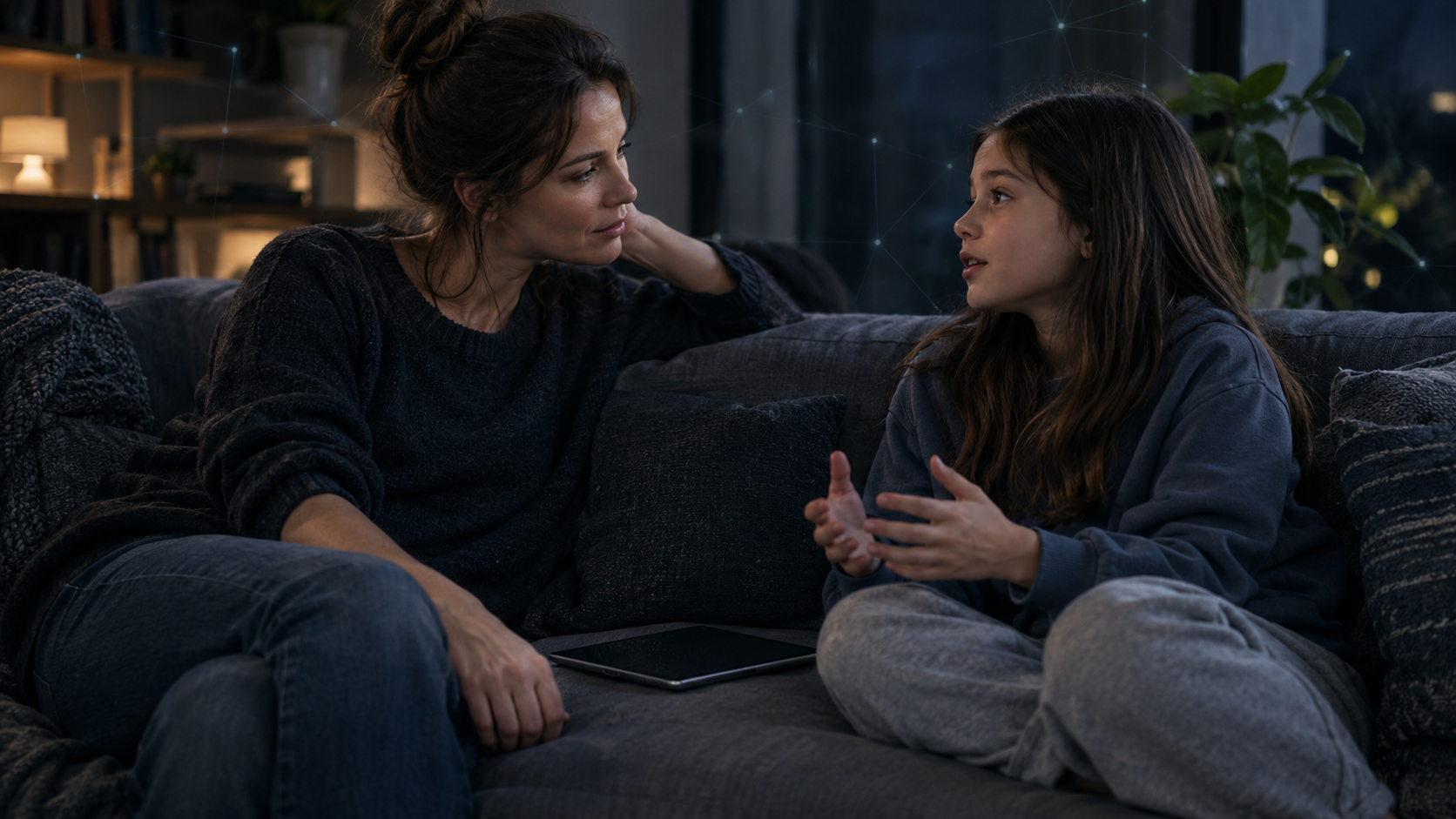
The UN has called for children to have a voice in how AI is built, and a new international coalition for children's rights in the age of AI was launched in Geneva in July 2026. But rules take years. In the meantime, the simplest protection is also the most overlooked: asking your child what they think and see. Many kids are already uneasy about AI. They simply haven't been invited to say so.

Five questions to ask this week
ONE
"Which AI tools do you and your friends actually use?"
Listen first. Curiosity gets better answers than a lecture.
TWO
"Has anyone at school shared a fake picture of someone?"
Opens the door without making them admit anything about themselves.
THREE
"What would you do if a picture of you got faked?"
Promise in advance that they will not be punished for telling you.
FOUR
"Is there anything AI does that feels off or creepy?"
Many kids already have instincts worth trusting.
FIVE
"What rules would you make if it were up to you?"
Children who help write the rules are far more likely to follow them.
Voluntary commitments from AI companies are not enough, the UN warned. Until binding rules arrive, the household is the first line of defence.

Your Action Plan This Week

Ask before you set rules Hold one calm family conversation about AI. Take notes on what your child says worries them.
Shrink the photo trail Make social accounts private and limit who can download or tag your child's pictures. Fewer public photos means less raw material.
Promise "no punishment" Tell your child that if anything frightening or fake appears, telling you will never cost them their phone.
Keep eyes on the tools Conversation works best alongside visibility into which AI apps your child uses and when something risky shows up.

If you need to report an AI-generated sexual image of a child, contact your local police and the platform where it appeared, and keep screenshots as evidence. Do not forward the image itself.

The world's children were finally asked about AI. Your own child is waiting for the same question.


Voluntary promises are not protection.

Start a free 14-day Blaick trial — no credit card required.

Blaick gives you a clear view of the AI tools your child uses and alerts you to high-risk interactions, so the conversation you start is backed by facts.

Start free trial →
Cancel anytime · Trusted by security-conscious families · Built on enterprise AI security